I Didn't Drift Into Jiu Jitsu. I Engineered Myself Into It.

Explore my tools: agents-skills-plugins
I didn't find Brazilian Jiu Jitsu in my 20s. I didn't grow up wrestling. I didn't "always want to try it."
I found it in an emergency room with gout in my foot.
I'd gained over 50 pounds. Stopped going to the gym. Let myself decay in the way busy people convince themselves is temporary. Then my body sent a message I couldn't ignore.
A few days after the ER visit, I was walking through my neighborhood and passed a house with a sign advertising BJJ. Turns out it was the gym coach's house. On a whim, I signed up.
I had no idea what I was in for.
First class, I got destroyed. By everyone. It didn't matter how hard I fought. They just did whatever they wanted to me. Choked me. Pinned me. Moved through my resistance like it wasn't there.
I was sold.
Not because I enjoyed getting crushed. Because I realized: I need to be able to do this. More importantly, nobody should be able to do this to me.
Within two weeks of starting, my body stopped cooperating. My arms wouldn't work. I had tennis elbow from years of sitting in front of a computer, and BJJ just brings out all your weaknesses and amplifies any injury. I saw a US doctor who offered me another cortisol shot and told me I was overdoing it.
Not what I wanted to hear. I needed a permanent solution.
A week later, I was in Serbia getting a PRP injection in my elbow. Regenerative therapy, not more drugs. Just like that, after years of suffering, my tennis elbow was cured.
To say the American medical system doesn't work is an understatement. It seems designed to manage your decline, not actually fix you.
Since starting jiu jitsu, I've dropped 60 pounds.
That was the beginning.
From there, I wasn't talking about hobbies. I was talking about systems. Camps. Seminars. Competition schedules. Diet. Recovery. Travel logistics. Software. Data. I wasn't asking if I could get good. I was already living in the version of myself that had.
My body just hadn't caught up yet.
The White Belt Who Wouldn't Act Like One
By mid-2024, I was training every single day.
I was sore constantly. Neck. Shoulders. Hips. Everything hurt. That didn't matter. Comfort was never the goal. Skill was.
I became obsessed with structure. Headquarters position. Float passing. Knee cuts. Dope guard. Top pressure. Logging rolls. Studying patterns. I wasn't wandering through jiu jitsu. I was building something, piece by piece.
I was still a white belt. But I wasn't behaving like one.
Greece Changed the Trajectory
The first real inflection point was Greece.
Three days. A camp. Different energy. Different intensity.
I came back sharper. Heavier. More certain.
I started beating people I couldn't beat before. Sometimes you just don't know if you're improving. Winning tells you. That's when the internal language changed. I stopped hoping I was good and started operating like someone who already was.
Confidence didn't show up as ego. It showed up as calm.
Escalation Phase
After that, everything accelerated.
Spain. San Diego. Las Vegas for ADCC and the Craig Jones Invitational. Two events with Rick Ellis. One seminar in San Diego, then the Old Grapplers Summit at GrapplersRetreat.com in Mendocino, CA. A camp in the middle of the woods where I finally got to roll with people my age instead of 20-somethings. Open mats. Competitions stacked on top of each other.
My body was wrecked. My game was accelerating.
I locked into a very specific competitive style: Heavy top pressure. Knee on belly. Mount transitions. Float passing. Points. Control. Inevitability.
I wasn't interested in flash. I wanted gravity.
By late 2024, I was flying myself to tournaments and treating jiu jitsu like a professional project. Because that's what it had become.

Lisbon
2025 forced the issue.
IBJJF European Championship. Lisbon.
I went in as a four-stripe white belt, already competing above the label. I was injured. My calf was compromised. I wasn't confident in takedowns. I was nervous, and I knew exactly how fragile the whole thing was.
Then the match started.
I imposed my game. I took control. I finished with an Ezekiel choke.
During the scramble, my opponent yanked my arm out of an overhook and tore my rotator cuff in two places. I didn't notice until I was standing on the podium with a gold medal around my neck.
Pain waits its turn.
I went back to the same doctor in Serbia who fixed my tennis elbow. More PRP. The rotator cuff is healing.
That win forced the promotion.
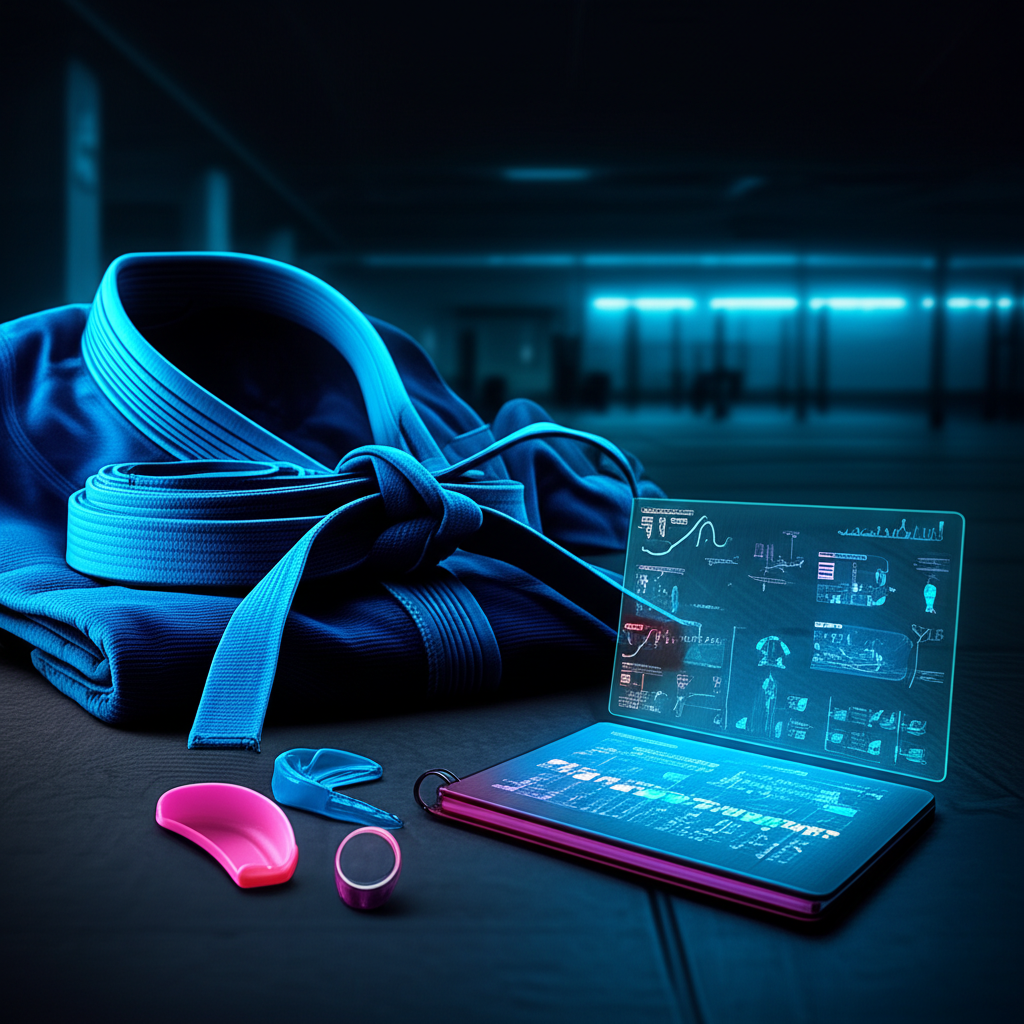
White belt to blue belt. Not by ceremony. Not by courtesy. By conquest.
Infrastructure, Not Just Training
After that, I didn't slow down. I doubled down.
I became obsessed with tracking. Attendance. Rolls. Techniques. Coaching feedback. I built BJJChat.com to log and analyze training the same way quants analyze markets. I wrote it while watching the first CJI and ADCC in Vegas. Cameras. Sensors. Systems watching the mat like instrumentation, not vibes.
I wasn't just training anymore.
I was building infrastructure around my training.
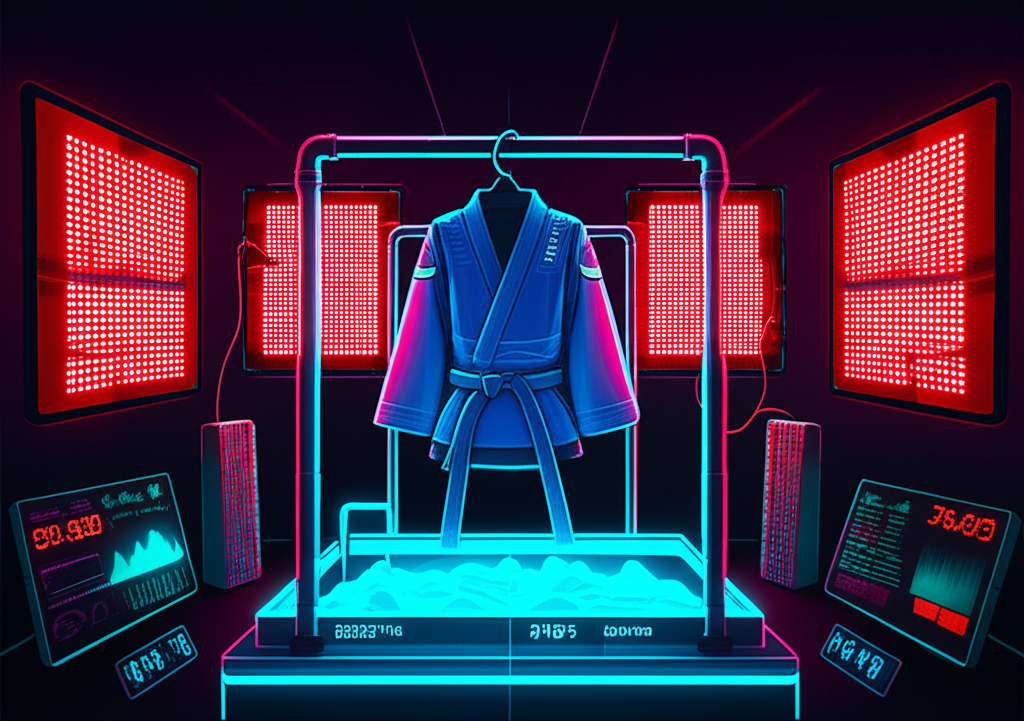
Weight came down. From super heavy toward heavyweight. Recovery became deliberate. Infrared. Heat. Cold. Massage. The same seriousness I bring to business, aviation, and software engineering now lived on the mat.
Jiu Jitsu as Hardening
Somewhere along the way, jiu jitsu stopped being just a sport.
It became part of how I think about legacy.
I created a trust that includes bounties for my descendants, explicitly incorporating Brazilian Jiu Jitsu into their hardening. Not as recreation. As a proving ground. As a way to build resilience, discipline, and the ability to function under pressure.
Soft people don't carry systems forward.
The Point
This isn't the history of jiu jitsu.
It's the history of a programmer, pilot, and entrepreneur who decided that being a white belt was unacceptable and built an entire life system around getting better at strangling people politely.
I didn't drift into jiu jitsu.
I engineered myself into it.
And I'm still mid-story.
One reaction per emoji per post.
// newsletter
Get dispatches from the edge
Field notes on AI systems, autonomous tooling, and what breaks when it all gets real.
You will be redirected to Substack to confirm your subscription.