What 2 Years of Jiu-Jitsu Taught Me About Debugging Code

Get the tool: superpowers/systematic-debugging
What Jiu-Jitsu Taught Me About Debugging
I started training jiu-jitsu two years ago. Around the same time, I was deep into building Bitcoin ATM software at Chainbytes. Looking back, the timing wasn't a coincidence - both disciplines demand the same mindset.
The Tap is Information
In jiu-jitsu, you tap when you're caught. It's not failure - it's data. Where did I get caught? Why didn't I see it coming? What position led to that submission?
Debugging is the same. A crash isn't a catastrophe. It's a breadcrumb.
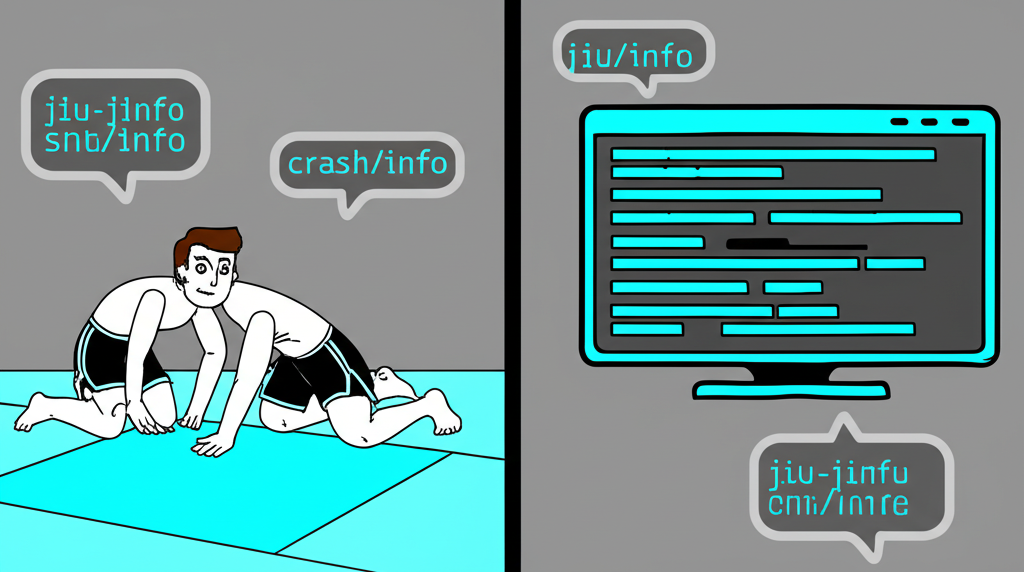
// The stack trace is your opponent's technique
try {
  await processTransaction(input);
} catch (error) {
  // Don't just log it. Study it like tape.
  console.log('Position:', error.stack);
  console.log('Submission:', error.message);
  console.log('Setup:', JSON.stringify(input));
}
Every time I get tapped, I ask my training partner: "What did you feel that made you go for that?" Every time my code crashes, I ask the same question. What input triggered this path?
Position Before Submission
This is day-one jiu-jitsu wisdom. Don't hunt for the finish. Establish dominant position first, then the submission presents itself.
I've watched junior developers spend hours hunting for a bug in the wrong file. They're submission hunting. They think they know where the problem is, so they dig there obsessively.
The senior move? Establish position first:
- Can you reproduce it consistently?
- What's the minimal reproduction case?
- What changed recently?
Once you have position - once you truly understand the state of the system - the bug often reveals itself.
Drilling is Unglamorous But Essential
Nobody posts their drilling sessions on Instagram. It's not flashy. It's the same movement, hundreds of times, until it becomes automatic.
Writing tests is drilling. Setting up proper logging is drilling. Building muscle memory with your debugger is drilling.
# Drilling your debugging fundamentals
git bisect start
git bisect bad HEAD
git bisect good v1.2.0
# Now let git do the detective work
When you're in a live roll - or a production incident at 2am - you don't rise to the level of your expectations. You fall to the level of your training.
Ego is the Enemy
The white belt who refuses to tap gets injured. The developer who refuses to admit they don't understand the codebase ships bugs.
Two years in, I'm still very much a beginner on the mats. But I've learned to ask questions that feel basic - both in jiu-jitsu and in code. "What does this function actually return?" "Why did that sweep work?"
I roll with everyone - the fresh white belts and the purple belts who tie me in knots. Everyone has something to teach you if you're willing to learn.
The Best Defense is Position
In jiu-jitsu, if you're defending a submission, you've already made several mistakes. The goal is to never be in a position where you need to defend.
In code, if you're debugging production, you've already made several mistakes. The goal is:
- Type safety that catches errors at compile time
- Tests that catch regressions before deploy
- Monitoring that alerts before users complain
Prevention beats cure. Every time.
Keep Showing Up
I'm not the most talented grappler at my gym. But I keep showing up. Rolling when I'm tired. Coding when it's hard. Building agentic tools when I could be watching TV.
Consistency beats talent when talent doesn't show up.
See you on the mats. And in the codebase.
"A black belt is just a white belt who never quit." - Unknown
Want to see the journey? I post competition footage and training highlights on my YouTube channel. Same mindset, different medium.
OSS.
One reaction per emoji per post.
// newsletter
Get dispatches from the edge
Field notes on AI systems, autonomous tooling, and what breaks when it all gets real.
You will be redirected to Substack to confirm your subscription.